Interview by Tumay Aslay
Love Letters to the World began with an unexpected season in Uruguay and a thank you letter that went viral. Today it has grown into a celebratory media company co-created by Molly Pacheco and her partner Brian Rashid, shining light on the everyday heroes, neighborhoods, and cultures that make our world feel like home. In their latest chapter, they turn their camera toward San Francisco’s Mission District, honoring immigrant families, Native leaders, small business owners, and culture keepers who pour love into this neighborhood every day. In this conversation, Molly shares the roots of the project, what it means to create inside community, and why love, curiosity, and celebration sit at the center of their work.
For people hearing about it for the first time, what is Love Letters, what is the bigger vision behind it, and how did this vision begin between you and Brian?
Love Letters to the World is a celebratory media company that shines light on the everyday heroes, communities, and places that make this world a beautiful place. The first iteration of this project was an accident of sorts. Brian, my co-creator and partner, got stuck in Uruguay at the start of the pandemic for the better part of a year. This was prior to us meeting. He knew a handful of people in the country at the time, and had to watch from afar as his media and international speaking business came to a pretty drastic halt.
For those who know Brian, it will come as no surprise that throughout those 8-10 months in Uruguay, Brian dove deep. Seeing, smelling, touching, hearing, everything he could, and thanks to his mastery of the Spanish language, talking with everyone he could. A couple of months before he would finally make his way back to the US, with an espresso in hand, Brian sat at a cafe and penned a thank you to the country, its people, and its majesty. He was moved by the open-hearted neighbors and friends he had made, by the country’s landscapes and waters, its foods, its politics, and pride.
He says that after writing the letter, he stepped outside and bawled his eyes out. I guess deep down we always know when something life-changing has happened. Shortly after posting the letter online, it went absolutely viral in Uruguay and around the world. People from all over the world wrote to him, sharing that his letter reminded them of what they loved about their country. For those living in Uruguay, it showed them what they had taken for granted.
A few things became very clear. 1. When people love where they live, good things happen. They are inspired to participate and give back to their neighbors, communities, towns, cities, and countries. 2. No matter who you are, everyone wants their life to matter in some way. 3. There are so many good things happening right around the corner that we may not be aware of. Whether it is because of the divisiveness of the times, the bad news media, our busy lives, or lack of opportunity, it is easy to miss that which is right in front of you. These are the pillars of Love Letters to the World. After leaving Uruguay and a period of reflection/ideation, Brian decided to create Love Letters to the World and made NYC his first stop. We met less than two weeks after his arrival to the city. I was a closeted creative who had spent my 20s in finance and was eager to shift into becoming the filmmaker that I always wanted to be. It was serendipitous.
Why build a storytelling platform rooted in love, optimism, and celebrating the good? What drew you into this approach?
It’s so easy to be inundated by the bad and the sad these days. We live in a strange time where people are addicted to bad news cycles, doom scrolling, crime shows, and psychological thrillers. This is the kind of content that people wind down with. I’ve been there - and don’t get me wrong, I will occasionally watch a thrilling movie - but I think those things stay in your psyche, especially when not consumed in moderation. Amidst all of this, we are also living in a very divided country/world. And while we recognize that there are problems and that places/systems/people are imperfect, there is already so much attention and energy going in that direction. Love Letters to the World is rooted in love, celebration, and optimism because we believe that love is medicine. And celebration is healing. And through these stories, we hope people are inspired to see what is possible for themselves and for those around them. We really believe in using media as a means to get people off their screens and into the real world.
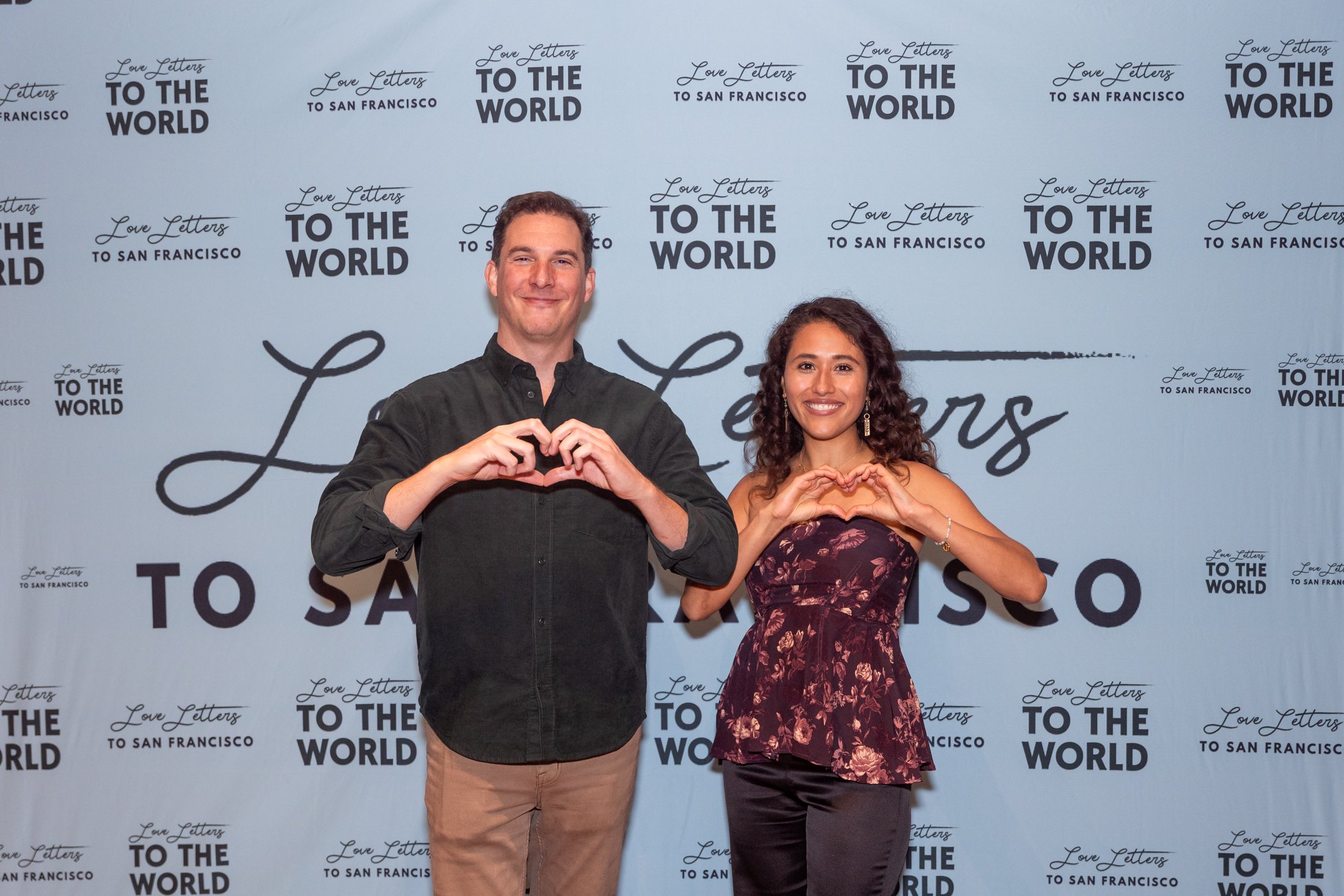
Brian Rashid and Molly Pacheco, creators of Love Letters to the World, in San Francisco, California, Nov. 2025
Photo credit: Eva Bendaña, courtesy of Love Letters to the World creators
Love Letters brings together so many voices from you two as creators to local business owners, culture keepers, and community leaders. How did your role evolve within such a collaborative ecosystem, and what does it feel like to help bring this vision to life together?
Brian has always made me feel included in Love Letters to the World. At the beginning, we were brainstorming, and I was soundboarding. There was also the occasional “hey, will you come film me…” And the more I was exposed to the work, the more I wanted to be a part of it. Brian has taught me so much, and thankfully, I learned quickly and have brought my own skills/essence to the work. My mom always jokes about how I never stopped asking questions as a kid, and that’s never really stopped. So I started helping with interviews, and eventually I was shooting, interviewing, editing, and pitching. It’s been the most fun I’ve had probably in my whole life.
As a storyteller, Brian has phenomenal instincts, and while we are both really excitable and eager to take action in the work, I tend to be the one who calls for a pause. Being Latina and the daughter of immigrant parents has really shaped who I am, and certainly brings a different perspective and an added layer of sensitivity to the work we do.
Standing on the stage with Brian and sharing the film with the community earlier this month was a true embodiment of love. Love for the work we do, the people we get to highlight, the communities we are honored to learn from, love for each other, and love of life. That may sound cheesy, but it's the truest thing I can say.
The Mission became the first neighborhood in San Francisco. What made this the natural starting place for you two?
We were drawn to start in the Mission for a few reasons. I am the daughter of two immigrant parents who came to the United States from Mexico with not a whole lot of anything. My parents, their story, their courage, and their love have always inspired me. It felt important to start in a part of the city that truly celebrates the Latino community, its cultures, and traditions. We also chose to live in the Mission when we arrived, so it felt natural to begin this campaign in the space around us.
The Mission is also where Brian worked his first job out of college. He entered an AmeriCorps program where he worked at a local school as a teacher and tutor. It was his first real exposure to the Latino community, and the reason he learned Spanish. His life changed because of that experience, and he wanted to come back and show his gratitude in the best way he knew how.
As you spent time filming, meeting community leaders, and walking the neighborhood, what moments really stayed with you?
That’s a hard question because I have been touched by so much. Sitting down with April McGill for the first time - she is the Executive Director of the American Indian Cultural Center - has to be one of the most vivid moments. Learning about her work, the community and eventually going to the community events has been so special. Going to their Pow Wow drum and dance classes, and their Gathering of Native Americans event were my first introductions to the community. I cherish their trust in welcoming me in.
Seeing, hearing, and tasting all of the Carnaval celebrations this last spring was a two day tour of the senses. There is so much more to Carnaval SF that we got to learn about from Rodrigo Duran. Yes, it is a celebration but there is also an huge economic impact and ripple effect that their work, as well as La Cocinas, has on the community and the city.
Walking through the Dandelion Chocolate plant with Todd Masonis, and tasting high quality and ethical chocolate was so much fun. Learning about the Latino Cultural District, its murals and alegria, with Susana Rojas of Calle 24, and playing with her dog Cenisa are definitely highlight moments. Definitely meeting Sam Mogannam. I mean he is just one of the most excited and happy people I have ever been around.
Truly, we are blessed to have met with such phenomenal people.
There is a lot of tenderness and respect woven into the film. How did you all approach telling these stories in a way that felt true to the Mission’s spirit?
It was very natural. I guess that it is because the people who are represented in the film are so in touch with their communities and the work they do, and very aligned with values we hold near and dear to our hearts. We have a lot of respect for community centered work - and it is not easy work to do, especially in a time when nonprofit budgets are very tight, and when community aligned or sustainable businesses are competing with convenient or conventional models of business. We admire the leaders, organizations and businesses we highlighted in the film, and I think that truth really shone though the film.
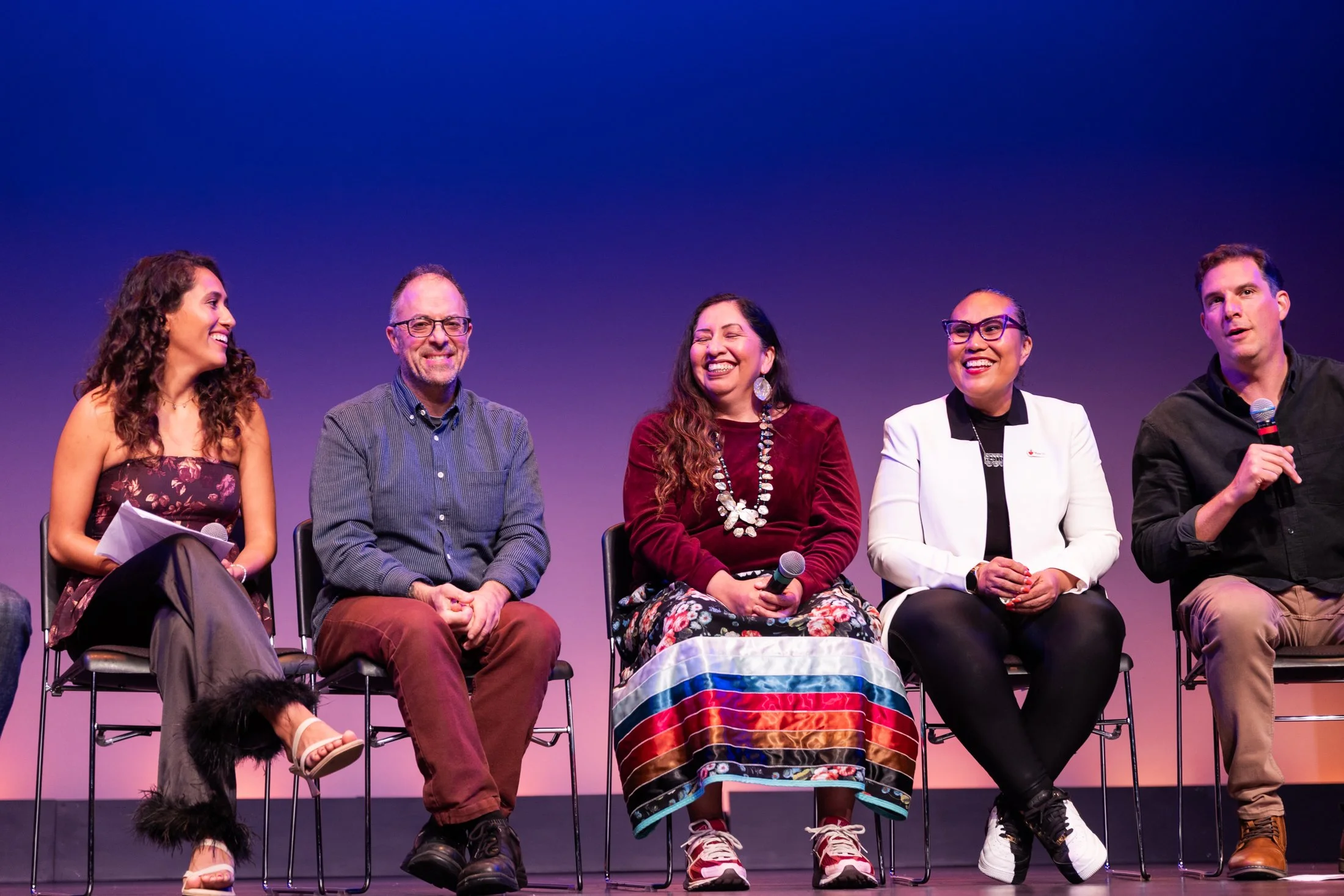
Molly Pacheco, Sam Bogannam of Bi-Rite, April McGill Executive Director of the American Cultural Center, Susana Rojas executive director Calle 24 and Brian Rashid at film premier of Love Letter to San Francisco. Brava Theater in San Francisco, California, Nov. 2025. Photo credit: Eva Bendaña.
The premiere at Brava Theater was powerful. What was that night like for you, and what did it mean for the two of you as collaborators to see this vision come alive?
The word that kept coming to us was BUZZING. We were both vibrating with excitement and joy. It felt special to have so many people who are doing good things together in one room. It felt really pure to have brought everyone together to celebrate each other. Some people knew one another, but there were a lot of new relationships made. That’s some of the magic that you cannot quantify. And it is one of the things that I find so cool about media - the ripple effects. You never really know who a film will reach and how it will inspire them. And I think the same can be said about the premiere itself.
You have talked about being a creative collaborator. What does that look like behind the scenes. What are the parts of the process where you feel most in your element?
I am pretty involved in most elements of the production. From pitching ideas, to storyboarding, reaching out to potential partners and community members to highlight, interviewing, filming, editing, logistics, and more. While we both wear all the hats, I love to storyboard, direct, and interview more than anything. I love to help people get comfortable and open enough to share their experiences. The interviewing process is very intimate for me because there is so much that has to happen before that moment. It’s the culmination of immense personal curiosity, trust building, independent research and exploration of the black/white/grey and color, empathy of nuance, thoughtful questions, and set design.
When you and your partner step into a new community, how do you two typically work together. How do your strengths complement each other?
Initially, we allow our curious instincts and desire to explore the depths of our surroundings to lead us to people, communities, stories. For example, when we first arrived to San Francisco, I was learning about California tribes, and it really was not sitting well with me to not acknowledge that we are always living on Native land in some way that was more than a verbal acknowledgement. And while this was a personal unrest, I realized that I could use my storytelling abilities to find a way to help elevate ongoing efforts. After doing some research, I learned about the American Indian Cultual Center, and was delighted to learn that they were right here in the Mission District, which is both the Latino Cultural District and the American Indian Cultural District. I met with April McGill, the Executive Director and the ideas and collaborations began.
Meanwhile, Brian’s mind and tastebuds are being delightfully blown by the delicious pluats, mission figs, Watsonville strawberries and red kiwis at Bi-rite. Only to learn about their commitment to farmers, their non-profit 18 Reasons, which gives low income families access to fresh foods. Of course, this leads us to meeting Sam Mogannom, the owner of Bi-Rite, who is just the deepest breath of fresh air. He’s got an amazing spirit, team and mission. He and his wife Anne, are pillars of light.
We are open to each other’s perspectives, interests, and have a deep trust in each other’s direction. I think when you know you are working with someone you can trust all around it is easy to lead them and be led by them. That’s how it works for us, at least.
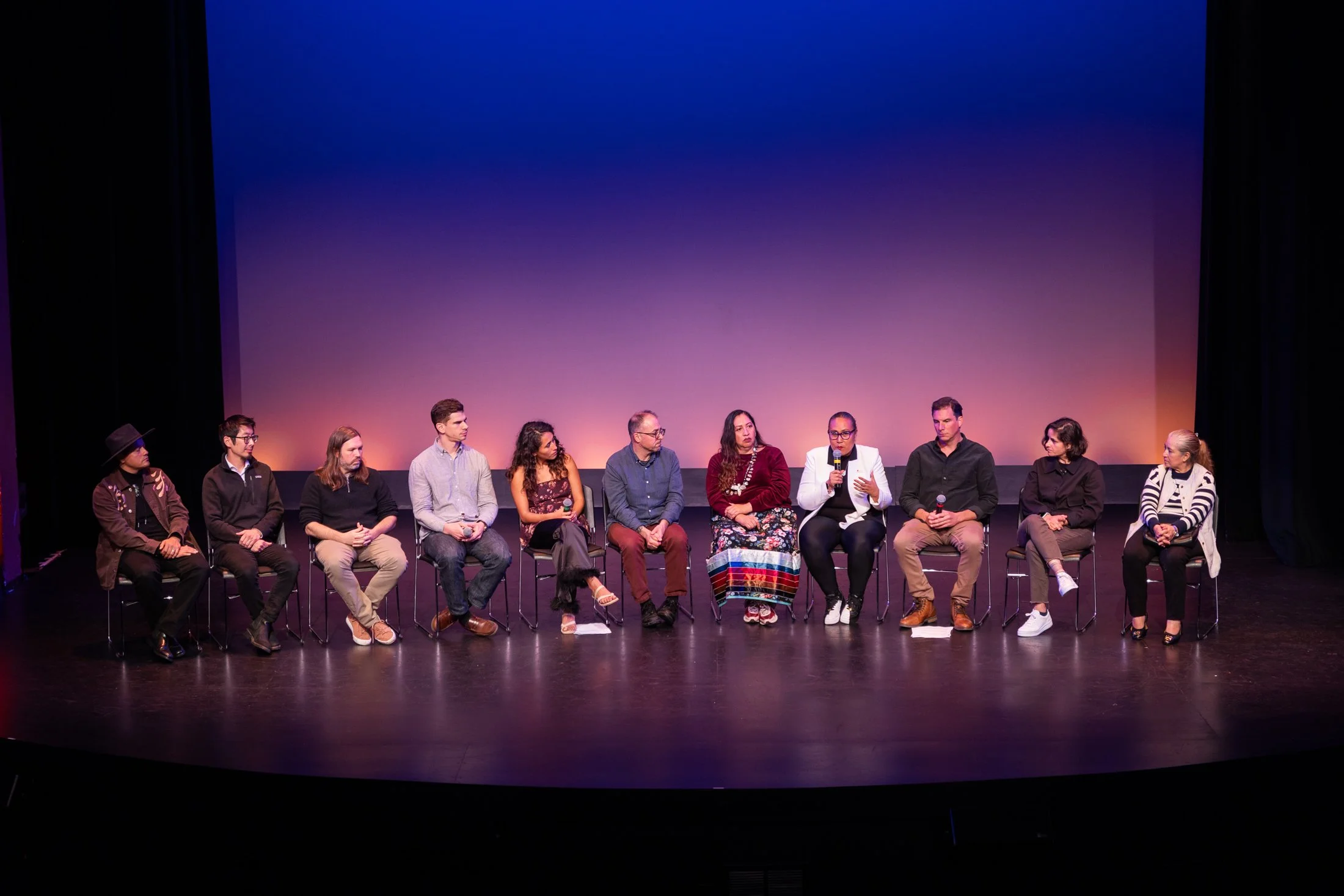
Q&A with featured guests at film premier of Love Letter to San Francisco: The Mission District. Brava Theater in San Francisco, California, Nov. 2025. Photo credit: Eva Bendaña.
This was just the first chapter of the San Francisco series. What neighborhoods are you excited to explore next?
The short answer is, all of them! San Francisco is a neighborhood city and I am fascinated by the people, worlds, cultures, and subcultures that live within each pocket.
We are currently working on our Love Letters to Chinatown film, which has been graciously sponsored by the Betty Louie Foundation. We hope to bring a different perspective to each of the neighborhood films. So for this piece we are hoping to get a glimpse of Chinatown from the perspective of Chinese or Chinese-American youth. We are exploring what they love and what they hope for the future of Chinatown in the hopes that their dreams have an opportunity to influence decisions being made today.
I am also really excited about building out a series honoring San Francisco’s nature - from the actual trees, flowers, seeds and sun in the parks, to the people who upkeep the parks, who keep the parks accessible, who advocate for them and who contribute to bringing magic to these spaces.
We are also very excited to continue the campaign we created in partnership The American Indian Cultural Center to create a campaign called “Why We Stay.” Throughout this series, we shared the voices of Urban Native elders, leadership, youth, and business owners, who are advocating for a physical space for the the cultural center. It’s actually the most surprising thing that I have learned throughout my time here. San Francisco is home to the largest Urban Native community. Yes, we are on Ohlone land, but there are also thousands of native families that were brought here due to the relocation act. And as you can imagine, their children and their children’s children haven’t had the same access to their culture, as they would have back home. The American Indian Cultural Center does a phenomenal job in providing so much cultural programming for the community, in spite of not having a physical center. This campaign is geared towards highlighting the Native community and the need for a cultural center, either through reparations by the city or through a capital campaign. We are excited to keep sharing these stories and uplifting more of the Native community’s stories.
Where do you hope Love Letters goes long term, whether that is within San Francisco, other cities, or worldwide?
I hope Love Letters to the World continues to go to the places where it is needed—places that could benefit from a disruption to a narrative that is no longer helping move things along in a positive direction. Places where really knowing your neighbor or community can boost morale, inspire engagement, and ground people in love. I do believe in life’s angelic whispers and serendipity, so while we are living in San Francisco right now, we are also developing Love Letters concepts and projects around the world.
I would love to bring Love Letters to Mexico, where my family is from, and to Lebanon, where Brian’s family is from. I know that will come in time. But the reality is that there are so many stories, and heroes behind those stories. And there are only two of us. So the real dream would be for Love Letters to the World to be a platform where people around the world can tell their own stories and celebrate the people in their own communities.
We started the Love Letters Academy to teach young people to film their own community stories on their iPhones. Again, we really want to use media as a tool to get people out into the world. We partner with schools to teach their students the whole production process: how to storyboard, interview, shoot, and edit.
Ideally, we flood the media world with goodness because it’s there and it’s true.
If someone wanted to support the project or get involved in future Love Letters chapters, what is the best way for them to do that?
Thanks for asking that! Get in touch with us through our website loveletters.info and on social media @mollycuules and @brianrashidglobal.
We hope to hear from you!
Listening to Molly makes it clear that Love Letters to the World is far more than a film project. It is a movement rooted in gratitude, curiosity, healing, and hope. Each chapter invites us to slow down and pay attention to the invisible threads that hold a neighborhood together, from immigrant families to culture keepers to the local heroes who show up every day with heart. As Molly and Brian continue their work across San Francisco and beyond, the core message remains the same. Love your community, honor its people, tell its stories, and let that love ripple outward. Because in the end, that is where the next love letter begins.