Love Letters brings together so many voices from you two as creators to local business owners, culture keepers, and community leaders. How did your role evolve within such a collaborative ecosystem, and what does it feel like to help bring this vision to life together?
Brian has always made me feel included in Love Letters to the World. At the beginning, we were brainstorming, and I was soundboarding. There was also the occasional “hey, will you come film me…” And the more I was exposed to the work, the more I wanted to be a part of it. Brian has taught me so much, and thankfully, I learned quickly and have brought my own skills/essence to the work. My mom always jokes about how I never stopped asking questions as a kid, and that’s never really stopped. So I started helping with interviews, and eventually I was shooting, interviewing, editing, and pitching. It’s been the most fun I’ve had probably in my whole life.
As a storyteller, Brian has phenomenal instincts, and while we are both really excitable and eager to take action in the work, I tend to be the one who calls for a pause. Being Latina and the daughter of immigrant parents has really shaped who I am, and certainly brings a different perspective and an added layer of sensitivity to the work we do.
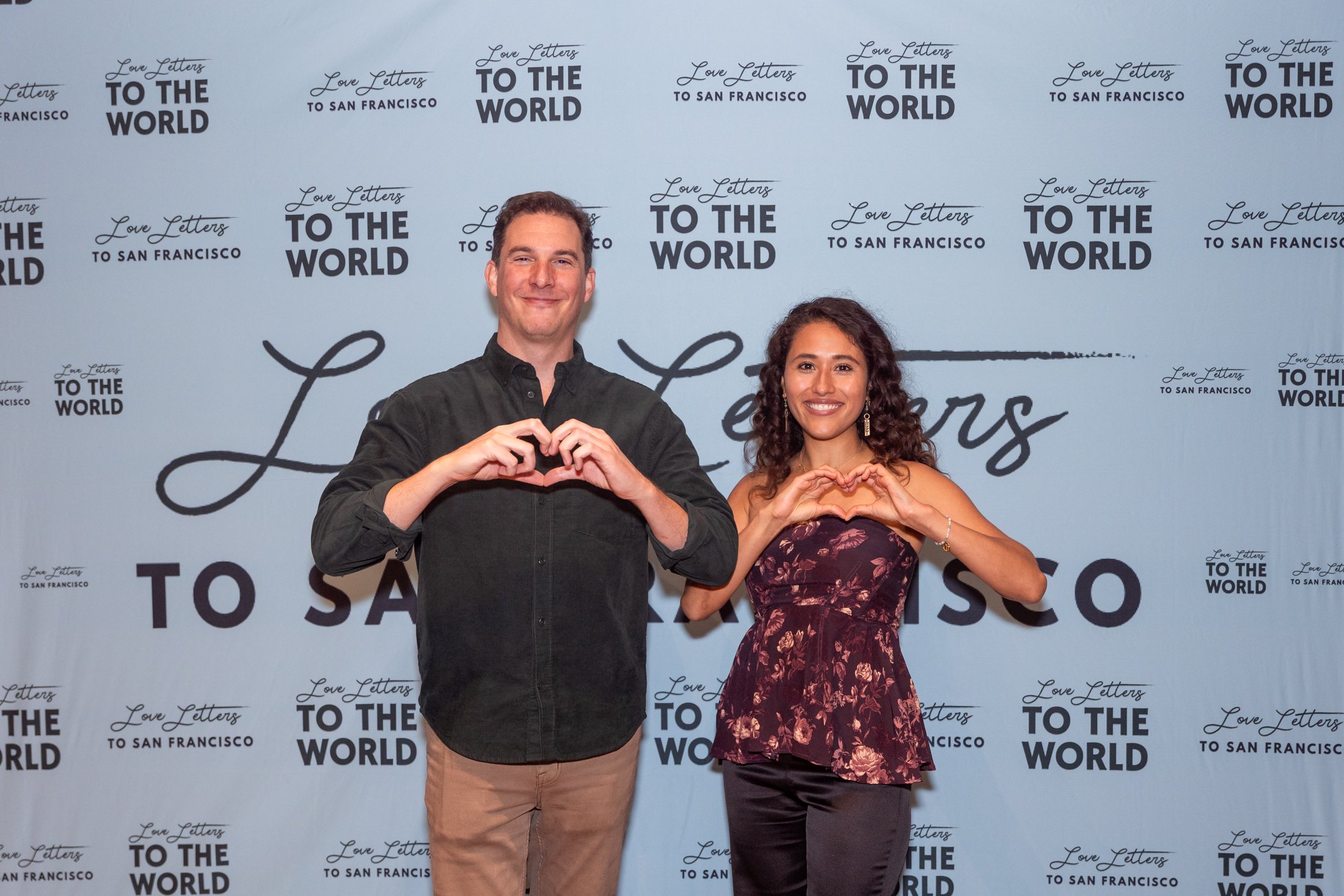
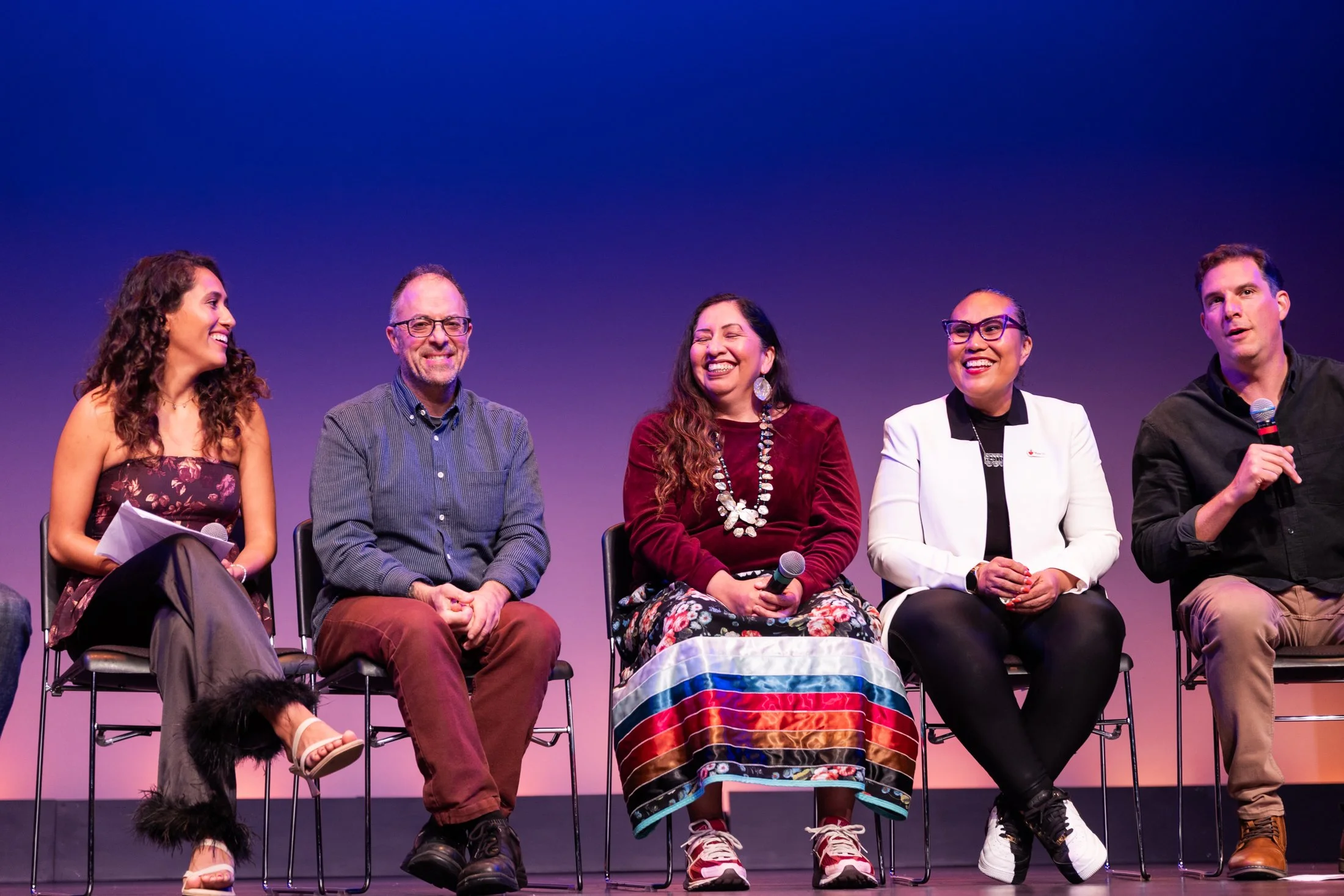
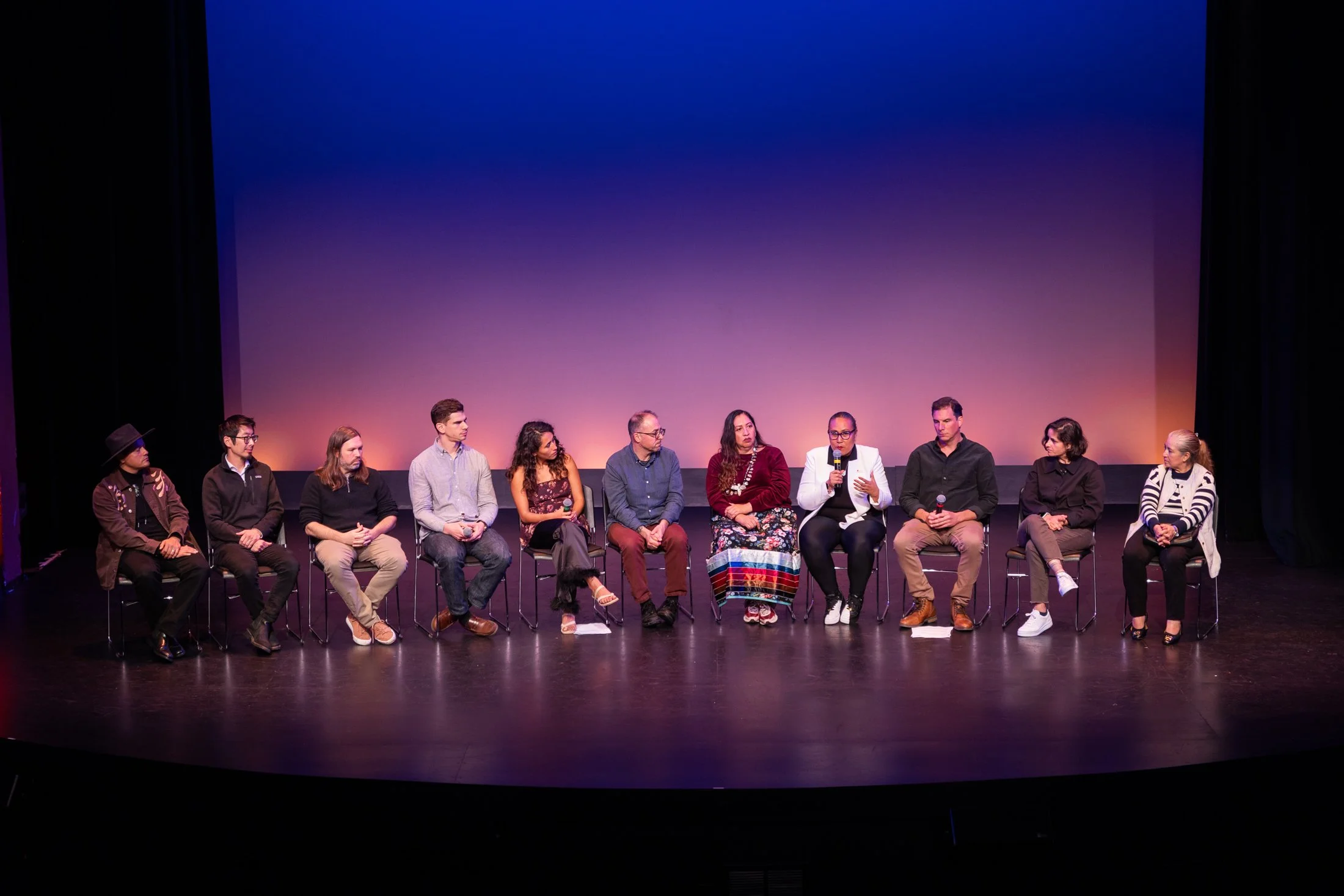
Standing on the stage with Brian and sharing the film with the community earlier this month was a true embodiment of love. Love for the work we do, the people we get to highlight, the communities we are honored to learn from, love for each other, and love of life. That may sound cheesy, but it's the truest thing I can say.
The Mission became the first neighborhood in San Francisco. What made this the natural starting place for you two?
We were drawn to start in the Mission for a few reasons. I am the daughter of two immigrant parents who came to the United States from Mexico with not a whole lot of anything. My parents, their story, their courage, and their love have always inspired me. It felt important to start in a part of the city that truly celebrates the Latino community, its cultures, and traditions. We also chose to live in the Mission when we arrived, so it felt natural to begin this campaign in the space around us.
The Mission is also where Brian worked his first job out of college. He entered an AmeriCorps program where he worked at a local school as a teacher and tutor. It was his first real exposure to the Latino community, and the reason he learned Spanish. His life changed because of that experience, and he wanted to come back and show his gratitude in the best way he knew how.
As you spent time filming, meeting community leaders, and walking the neighborhood, what moments really stayed with you?
That’s a hard question because I have been touched by so much. Sitting down with April McGill for the first time - she is the Executive Director of the American Indian Cultural Center - has to be one of the most vivid moments. Learning about her work, the community and eventually going to the community events has been so special. Going to their Pow Wow drum and dance classes, and their Gathering of Native Americans event were my first introductions to the community. I cherish their trust in welcoming me in.
Seeing, hearing, and tasting all of the Carnaval celebrations this last spring was a two day tour of the senses. There is so much more to Carnaval SF that we got to learn about from Rodrigo Duran. Yes, it is a celebration but there is also an huge economic impact and ripple effect that their work, as well as La Cocinas, has on the community and the city.
Walking through the Dandelion Chocolate plant with Todd Masonis, and tasting high quality and ethical chocolate was so much fun. Learning about the Latino Cultural District, its murals and alegria, with Susana Rojas of Calle 24, and playing with her dog Cenisa are definitely highlight moments. Definitely meeting Sam Mogannam. I mean he is just one of the most excited and happy people I have ever been around.
Truly, we are blessed to have met with such phenomenal people.
There is a lot of tenderness and respect woven into the film. How did you all approach telling these stories in a way that felt true to the Mission’s spirit?
It was very natural. I guess that it is because the people who are represented in the film are so in touch with their communities and the work they do, and very aligned with values we hold near and dear to our hearts. We have a lot of respect for community centered work - and it is not easy work to do, especially in a time when nonprofit budgets are very tight, and when community aligned or sustainable businesses are competing with convenient or conventional models of business. We admire the leaders, organizations and businesses we highlighted in the film, and I think that truth really shone though the film.